Heirs of Brian Boru
The O'Briens of Thomond
Princes of Thomond
Of all the great Gaelic dynasties of Ireland, the O'Briens stand apart. They descend from the most celebrated of all the High Kings: Brian Boru, who broke the power of the Norse and fell at the Battle of Clontarf in the hour of his greatest victory. Where most of the old Irish royal houses were swept away, the O'Briens endured, moving from kings to princes to earls to chieftains, carrying the blood of Brian Boru through a thousand years of Thomond and the heart of County Clare.
Brian Boru and the kingdom of Thomond
The line begins with Brian Boru, the warrior-king who united much of Ireland in the early eleventh century and fell at the Battle of Clontarf in 1014, even as his forces shattered the Viking host. From his descendants sprang the kingdom of Thomond, "North Munster," across the lands of Clare and the lower Shannon, ruled for centuries by the O'Briens as kings in their own right. Few families in Europe can claim so ancient or so royal an origin.
From Gaelic kings to Tudor earls
The arrival of the Tudors forced a reckoning. In 1543, under King Henry VIII's policy of "surrender and regrant," Murrough O'Brien, the last King of Thomond, surrendered his Gaelic kingship and was created Earl of Thomond and Baron Inchiquin in the Peerage of Ireland. It was a bargain typical of the age: the ancient royal style exchanged for an English title, binding the O'Briens into the new order while securing their place at the head of their people. The earldom of Thomond would in time fall dormant, but the barony of Inchiquin endured.
The castles of Clare
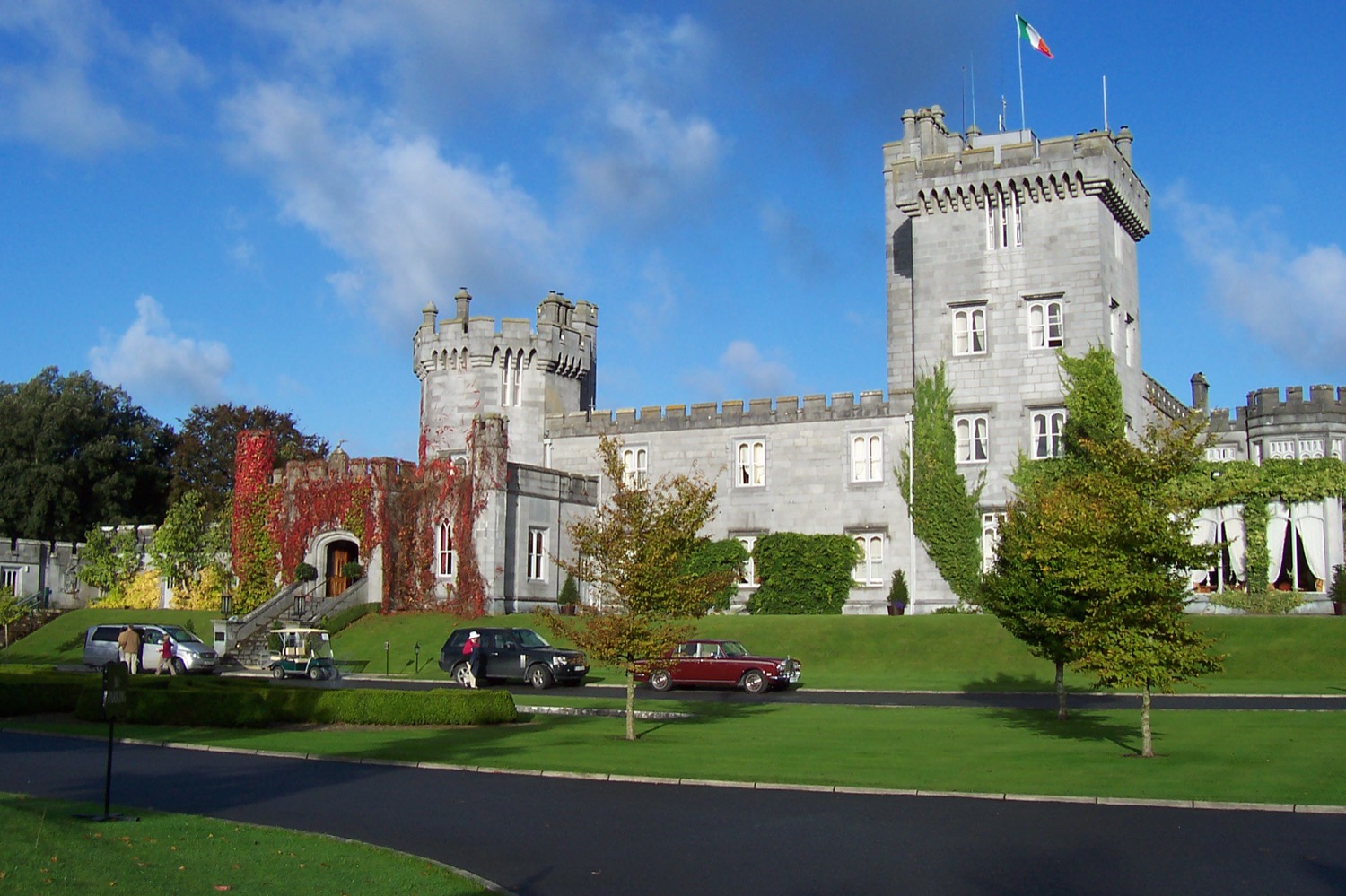
The O'Brien story is written into the landscape of Clare. Their ancestral seat became Dromoland Castle near Newmarket-on-Fergus, today a celebrated five-star hotel, having left family hands in the twentieth century. Nearby stands the gaunt tower of Leamaneh Castle, forever associated with Máire Rua, "Red Mary" O'Brien, whose fierce reputation made her one of the most storied women in Irish folklore. These strongholds, ruined and restored alike, mark the heartland of Thomond.
A chieftaincy preserved
What makes the O'Briens truly exceptional is the survival of their Gaelic chieftaincy. The head of the family is styled The O'Brien, Chief of the Name, Prince of Thomond: one of the very few Irish chieftaincies to descend in an unbroken line from the age of the High Kings. So venerable was the family's standing that, by tradition, when the Irish Free State sought a head of state, the chief of the O'Briens was reportedly offered the dignity of "Prince-President," an honour declined, leaving the office of President of Ireland to be instituted instead. The twentieth-century chiefs also revived the wider clan, founding the O'Brien Clan Association and hosting, in 1992, the first great gathering of the name in four centuries.
The modern era: Sir Conor O'Brien, 19th Baron Inchiquin
The present chief is Sir Conor O'Brien, 19th Baron Inchiquin, The O'Brien and Prince of Thomond, who succeeded his cousin in 2023. Though Dromoland Castle itself is long sold, the family remains rooted in County Clare, keeping faith with a heritage that reaches back to Clontarf. In him the senior line of Brian Boru's descendants continues: a living connection to the oldest royalty in Ireland.
The O’Briens of Thomond, Succession
The O’Brien succession runs from the Gaelic kingship through the Tudor earldom of Thomond and the unbroken barony of Inchiquin, created simultaneously in 1543 under surrender and regrant.
Earls of Thomond (1st creation, 1543)
- 1st Murrough O’Brien1st Earl of Thomond and 1st Baron Inchiquin; last King of Thomond, surrendered Gaelic kingship 1543, d. 1551.
- 2nd Donough O’Brien2nd Earl of Thomond; previously Baron Ibrickane, succ. 1551, d. 1553.
- 3rd Connor O’Brien3rd Earl of Thomond; succ. c. 1553, d. 1581.
- 4th Donogh O’Brien4th Earl of Thomond; succ. 1581, d. 1624.
- 5th Henry O’Brien5th Earl of Thomond; succ. c. 1624, d. 1639.
- 6th Barnabas O’Brien6th Earl of Thomond; succ. c. 1639, d. 1657.
- 7th Henry O’Brien7th Earl of Thomond; succ. c. 1657, d. 1691.
- 8th Henry O’Brien8th Earl of Thomond; succ. 1691, d. 1741 – earldom forfeit on his death, leaving the barony of Inchiquin as the surviving dignity.
Barons Inchiquin (1543, continuing)
- 1st Murrough O’Brien1st Baron Inchiquin (also 1st Earl of Thomond); created 1543, d. 1551.
- 2nd Dermod O’Brien2nd Baron Inchiquin; d. 1557.
- 3rd Murrough McDermot O’Brien3rd Baron Inchiquin; 1550–1574.
- 4th Murrough O’Brien4th Baron Inchiquin; 1563–1597.
- 5th Dermod O’Brien5th Baron Inchiquin; 1594–1624.
- 6th Murrough O’Brien6th Baron Inchiquin; 1618–1674; created Earl of Inchiquin in 1654.
- 7th William O’Brien2nd Earl of Inchiquin, 7th Baron; 1640–1692.
- 8th William O’Brien3rd Earl of Inchiquin, 8th Baron; 1662–1719.
- 9th William O’Brien4th Earl of Inchiquin, 9th Baron; 1700–1777.
- 10th Murrough O’Brien5th Earl of Inchiquin, 10th Baron; 1726–1808; created Marquess of Thomond 1800.
- 11th William O’Brien2nd Marquess of Thomond, 6th Earl, 11th Baron; 1765–1846.
- 12th James O’Brien3rd Marquess of Thomond, 7th Earl, 12th Baron; 1768–1855; marquessate and earldom extinct on his death.
- 13th Lucius O’Brien13th Baron Inchiquin; 1800–1872; barony reverted to its original form.
- 14th Edward Donough O’Brien14th Baron Inchiquin; 1839–1900.
- 15th Lucius William O’Brien15th Baron Inchiquin; 1864–1929.
- 16th Donough Edward Foster O’Brien16th Baron Inchiquin; 1897–1968.
- 17th Phaedrig Lucius Ambrose O’Brien17th Baron Inchiquin; 1900–1982.
- 18th Conor Myles John O’Brien18th Baron Inchiquin, The O’Brien, Prince of Thomond; 1943–2023.
- 19th Sir Conor John Anthony O’BrienPresent holder; 19th Baron Inchiquin, The O’Brien, Prince of Thomond; b. 1952, succ. June 2023.
The blood of Brian Boru
The O'Briens of Thomond are a rarity among the noble houses of Europe: a family that was royal before the Normans came, that bent without breaking to the Tudors, and that carries its chieftaincy still. From the battlefield of Clontarf to the green fields of Clare, theirs is a lineage measured not in centuries but in millennia. The enduring heirs of Brian Boru.