Premier Dukes of England
The Duke of Norfolk
Premier Dukes of England, Keepers of the Crown's Great Ceremonies
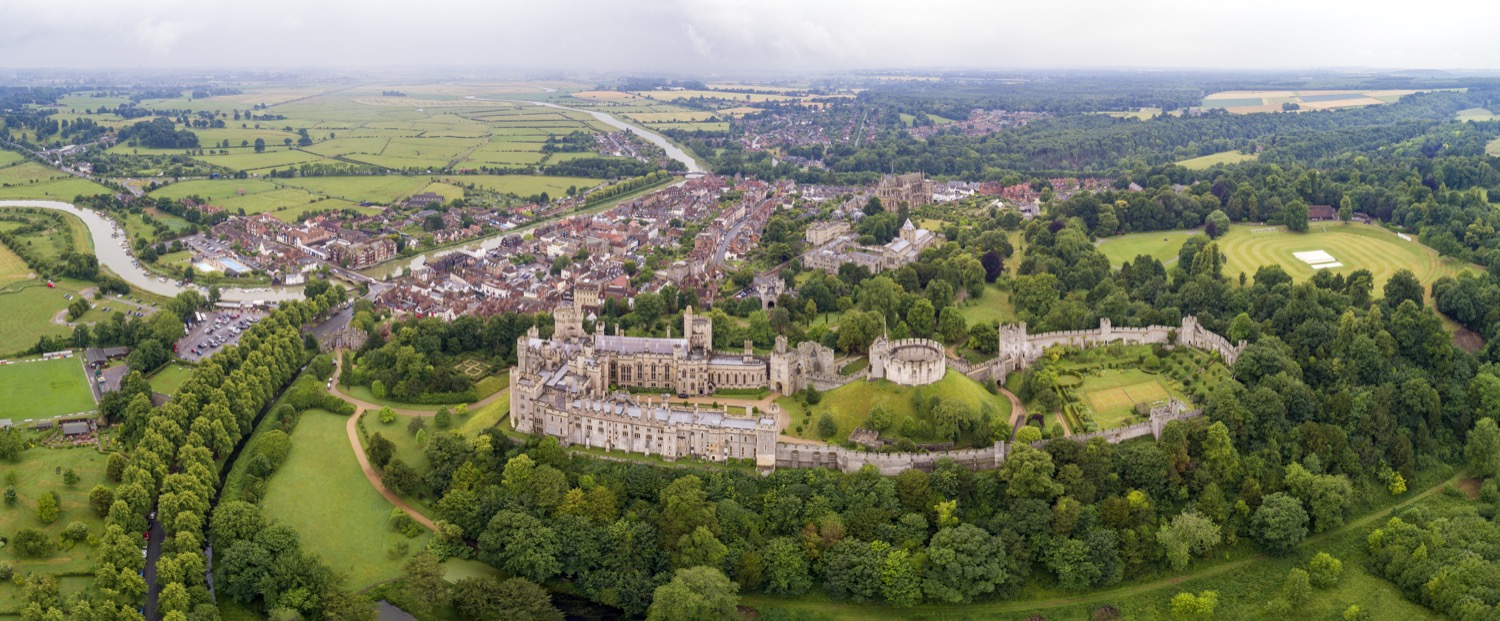
No title in the Peerage of England stands higher than the Dukedom of Norfolk. For more than five centuries the Howard family has held that premier dignity and with it the hereditary office of Earl Marshal, the great officer of state who orders coronations, royal funerals and the State Opening of Parliament. Through attainder, restoration and the wreck of dynasties around them, they have endured: Catholic nobles at the summit of a Protestant realm, premier peers whose castle still guards the Sussex downs.
From the Bigods to the Howards
The honour of Norfolk reaches back to the Normans. The Bigod earls held East Anglia from the late eleventh century; when their male line failed in 1307 the earldom reverted to the Crown and passed, through the Mowbrays, into a new creation. The dukedom itself was made in 1397, and by the late fifteenth century it had come to the Howards, who, like so many of England’s first families, traced their blood to Edward I. Attainder stripped them more than once and restored them again: the 4th Duke went to the scaffold in 1572, and the title lay in abeyance for nearly a century before being revived in 1660. Through every reversal the family kept its footing, ending as premier dukes of England and, through the Fitzalan inheritance, premier earls as well.
The Earl Marshal: choreographer of the realm
The Howards’ most singular distinction is the hereditary office of Earl Marshal, held by the family since the late fifteenth century and continuously since the Restoration. The Earl Marshal presides over the College of Arms and stages the great ceremonies of state: coronations, royal funerals, the State Opening of Parliament. Heralds bearing their splendidly medieval titles, Garter King of Arms, Rouge Dragon Pursuivant and the rest, work under his direction, and the whole proceeding is conducted in liveries and tabards that have barely changed in five hundred years. No other office places a single nobleman so consistently at the centre of the nation’s solemnest occasions.
Arundel Castle
The seat of the dukes is Arundel Castle in West Sussex, where ancestors of the house have lived for the better part of nine centuries. Begun shortly after the Conquest and extensively rebuilt in the Victorian age, its battlements and great keep crown a ridge above the River Arun, visible for miles across the Sussex levels. The castle has served as a working fortress, a ducal residence and, today, a house open to visitors who come for its state rooms, library, chapel and gardens.
Faith and endurance
Equally remarkable is the family’s faith. Through the long centuries of penal laws, the dukes of Norfolk held to Rome, becoming the leading recusant house in England. For generations that loyalty barred them from public office and from their seats in Parliament. The premier peers of a Protestant kingdom were also its most conspicuous Catholics: a paradox that runs through English history for two hundred years, and one the Howards bore without flinching.
The modern era: Edward Fitzalan-Howard, 18th Duke
The title today is held by Edward Fitzalan-Howard, 18th Duke of Norfolk, who succeeded his father in 2002. As Earl Marshal he has presided over two of the most demanding occasions in recent memory: the state funeral of Queen Elizabeth II in September 2022, preparations for which he is said to have begun two decades in advance, and the Coronation of King Charles III in May 2023. His heir, the Earl of Arundel, will one day take up both the dukedom and the ancient office that comes with it.
Dukes of Norfolk — Succession
The Howard creation of 1483; earlier creations of 1397 and 1425 are excluded.
Howard line (1483 creation)
- 1st John Howard1st Duke, 1483–1485; killed at Bosworth
- 2nd Thomas Howard1514–1524; attainder reversed 1514; victor of Flodden
- 3rd Thomas Howard1524–1554; uncle of Anne Boleyn and Catherine Howard; attainted 1547, restored 1553
- 4th Thomas Howard1554–1572; attainted and executed for the Ridolfi Plot
- 5th Thomas Howard1660–1677; title restored after lapse during attainder
- 6th Henry Howard1677–1684
- 7th Henry Howard1684–1701
- 8th Thomas Howard1701–1732
- 9th Edward Howard1732–1777
- 10th Charles Howard1777–1786
- 11th Charles Howard1786–1815
- 12th Bernard Edward Howard1815–1842
- 13th Henry Charles Howard1842–1856
- 14th Henry Granville Fitzalan-Howard1856–1860
- 15th Henry Fitzalan-Howard1860–1917; restored Arundel Castle
- 16th Bernard Marmaduke Fitzalan-Howard1917–1975; Earl Marshal at five coronations
- 17th Miles Francis Stapleton Fitzalan-Howard1975–2002
- 18th Edward William Fitzalan-HowardThe present Duke, since 2002; Earl Marshal at the state funeral of Queen Elizabeth II (2022) and Coronation of King Charles III (2023)
Keepers of the ceremony
From the Bigods of East Anglia to the Howards of Arundel, the dukes of Norfolk represent a continuity rare even in England. They are the realm’s premier nobles and the keepers of its grandest rituals: a family whose name appears in the record of every coronation and every royal farewell, whose castle has stood above the Sussex downs since the days of the Conqueror, and who have managed, through attainder and penal law and the collapse of dynasties around them, to still be there.