MacCailein Mòr
The Duke of Argyll
MacCailein Mòr and the Campbells of Inveraray
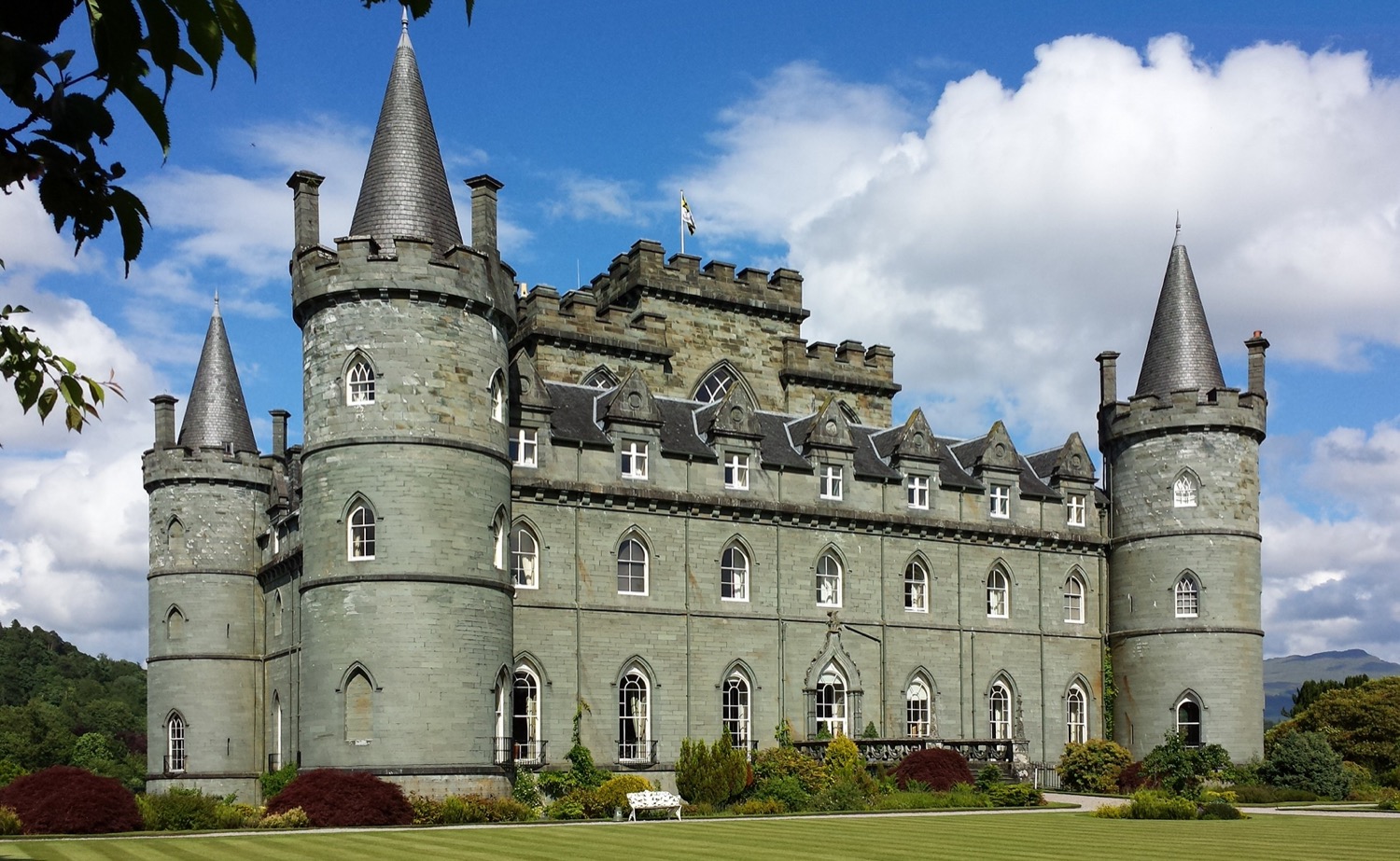
In the Highlands of Scotland, no name carries greater weight than Campbell, and no Campbell a heavier title than the chief of the name: MacCailein Mòr, the Duke of Argyll. From their stronghold on Loch Fyne, the Campbells climbed to become one of the most powerful kindreds in Scottish history, present at every great turning of the nation’s past and bearers of a chieftaincy a thousand years old.
The rise of the house of Argyll
Clan Campbell drew its origins from the medieval kingdom of Dál Riata and fought its way to prominence in the wars of Scottish independence. The chiefs took the style MacCailein Mòr, "Son of Colin the Great," in memory of a leading Campbell who fell in battle in 1296. Through shrewd alliance, royal service and sheer territorial aggression, they spread their holdings across Argyll. Created earls in the fifteenth century, they became the Crown’s instrument of power in the Highlands, indispensable to successive Scottish kings.
A dukedom and a turbulent destiny
The dukedom was created in 1701 by William of Orange, rewarding the family’s support of the new Protestant settlement. The path to that reward had been costly. The 1st Marquess of Argyll, a principal leader of the Covenanters, was executed in 1661 after the Restoration of Charles II; his son, the 9th Earl, met the same fate in 1685 for his part in a rebellion against James VII and II. Few families navigated the storms of the seventeenth century closer to destruction, and fewer still recovered to stand higher on the other side.
The shadow of Glencoe
The Campbell story is not without its darkness. In February 1692, soldiers of a regiment under a Campbell laird carried out the massacre of Glencoe, killing members of the MacDonald clan in their homes. The order came from the government of the day, not from Inveraray, but the stain has clung to the clan’s name in popular memory ever since. An honest account of the family sets it down alongside their many distinctions.
Inveraray Castle
The seat of the dukes is Inveraray Castle on Loch Fyne, a grey-green stone building with conical turrets, raised from the 1740s to replace the old Campbell fortress. It is among the earliest and most accomplished examples of the Gothic Revival in Britain. The castle remains the family home today: its armoury, state rooms and parkland draw visitors in their thousands each year, and the building carries seven centuries of Campbell power in its fabric.
The modern era: Torquhil Campbell, 13th Duke
Torquhil Campbell, 13th Duke of Argyll in the Peerage of Scotland, succeeded his father in 2001 and lives at Inveraray with his family. As MacCailein Mòr he is chief of Clan Campbell, a kindred that counts its members in the millions across the world. He is keeper of the clan motto Ne Obliviscaris, "Forget Not," and his heir bears the historic courtesy title of Marquess of Lorne.
Dukes of Argyll — Succession
The dukedom was created in the Peerage of Scotland on 21 June 1701; a further creation in the Peerage of the United Kingdom followed in 1892.
Dukes of Argyll (Peerage of Scotland, 1701)
- 1st Archibald Campbell1701–1703; created duke by William II of Scotland; formerly 10th Earl of Argyll
- 2nd John Campbell1703–1743; soldier and politician; known as Red John of the Battles
- 3rd Archibald Campbell1743–1761; Lord Justice General; the last great Campbell political manager
- 4th John Campbell1761–1770; cousin of the 3rd Duke; succeeded on the latter's death
- 5th John Campbell1770–1806; son of the 4th Duke; held the title for thirty-six years
- 6th George William Campbell1806–1839; Lord Privy Seal 1796–1799 and 1805–1806
- 7th John Douglas Edward Henry Campbell1839–1847; briefly held the title; died without male heir
- 8th George John Douglas Campbell1847–1900; scientist, author and statesman; Lord Privy Seal 1852–1855 and 1859–1866
- 9th John George Edward Henry Douglas Sutherland Campbell1900–1914; Governor General of Canada 1878–1883; married Princess Louise
- 10th Niall Diarmid Campbell1914–1949; served in both World Wars
- 11th Ian Douglas Campbell1949–1973; writer and noted genealogist of Clan Campbell
- 12th Ian Campbell1973–2001; restored Inveraray Castle after the 1975 fire
- 13th Torquhil Ian Campbell2001–present; chief of Clan Campbell; MacCailein Mòr
Forget not
From the wars of independence to the present day, the Campbells have stood near the centre of Scotland’s story: triumphant and tragic, indispensable and feared. Their castle still rises above Loch Fyne, and the watchword they have carried for seven centuries endures. Ne Obliviscaris. Forget not.