A Scottish Lordship
Lord Kinfauns
Guardians of Legacy
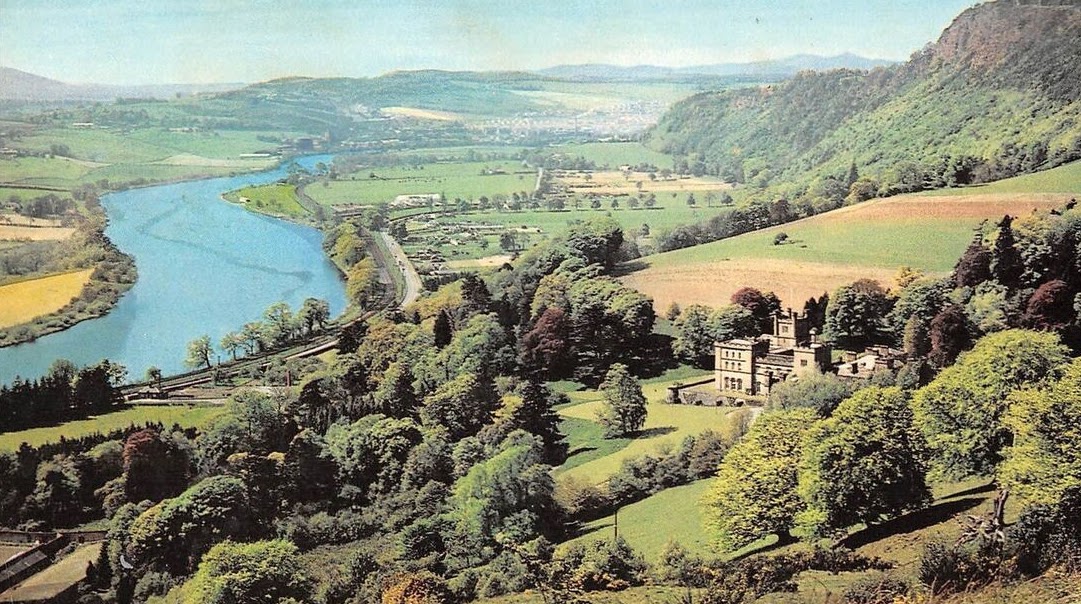
Few Scottish lordships can claim so colourful a beginning as Kinfauns. From a sea-rover redeemed and knighted in the wars of independence, the title has descended through six centuries and a succession of great houses, Charteris, Lindsay, Hay, Gray and Stuart, to the family who hold it today. This is the story of the lands above the Tay and the people who guarded them.
Origins: The Pirate Who Became a Knight
The first Lord of Kinfauns came to his lands by one of the most colourful roads in all Scottish legend. Sir Thomas de Longueville was a Frenchman of good family who, in a quarrel at the court of Philip the Fair, killed a nobleman in the king’s own presence. Refused a pardon for the deed, he fled to the sea, and under the name of the Red Reaver he became the terror of seafaring men, a pirate without mercy.
His fortunes turned when Sir William Wallace, crossing to France, met and overpowered him. Admiring a courage that deserved a better cause, Wallace brought the reaver before King Philip and begged his pardon; the king, glad to oblige the Scottish hero, lifted the sentence of outlawry and dubbed his penitent subject a knight. De Longueville followed Wallace home and never left his side.
When Wallace was betrayed and carried into England and Robert the Bruce claimed the crown, it was this redeemed knight, now bearing the name Charteris, who was first into the water at the taking of Perth in January 1313. For that bravery the Bruce rewarded him with the lands and the title of Lord of Kinfauns, and from him the lordship descended through the Charteris family, among the leading houses of medieval Scotland.

The Charteris Lords in the Record
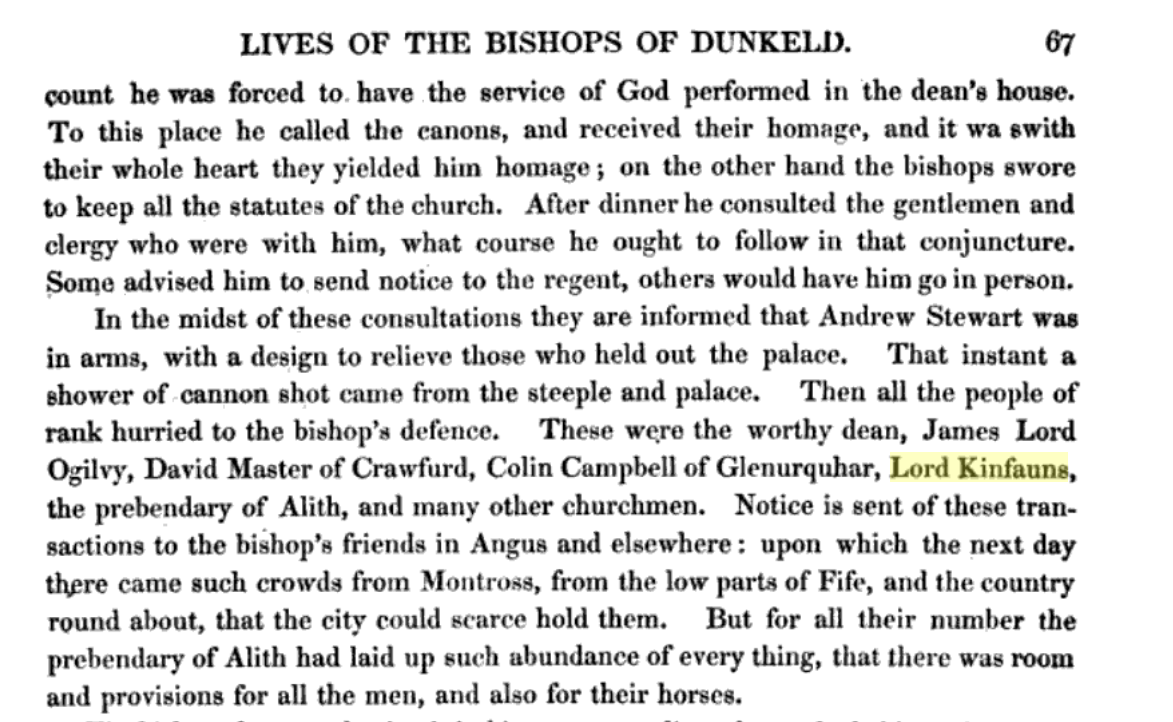
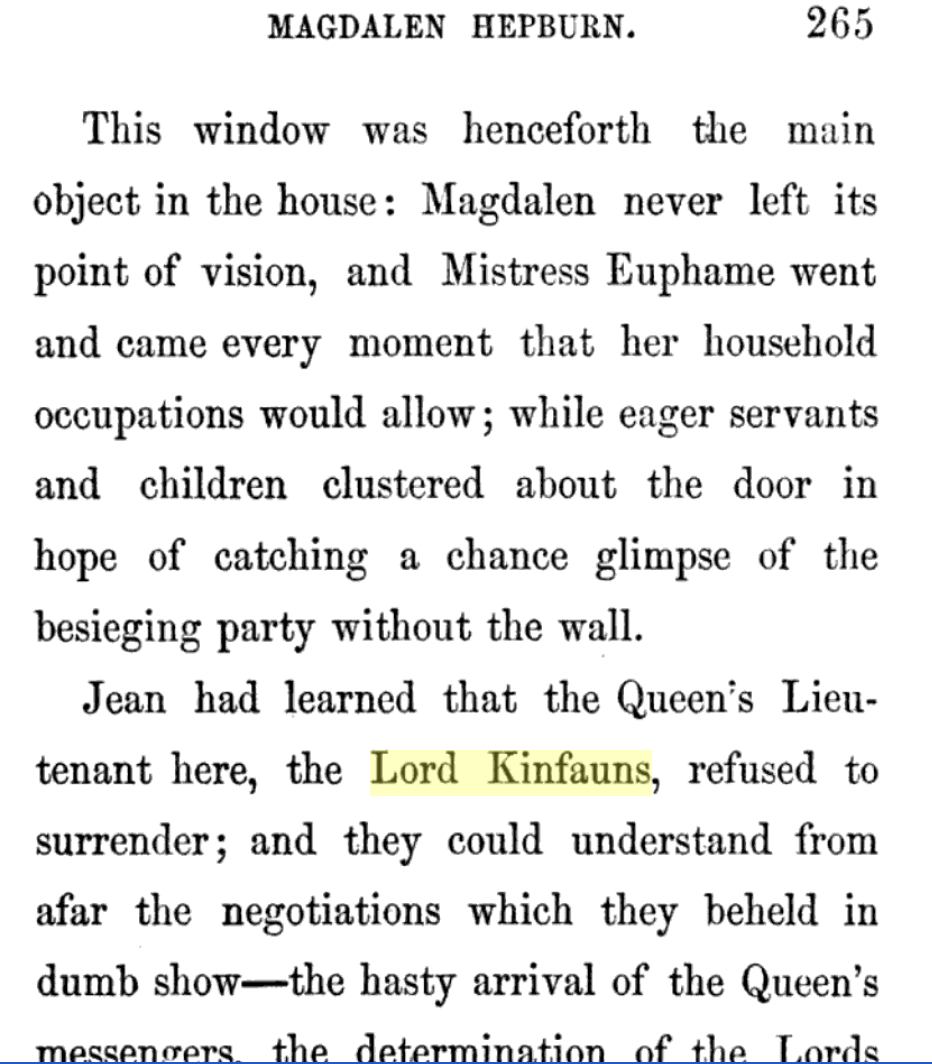
The early lordship leaves its mark across the muniments of Perth and the law reports of the day. In one case the court upheld Lord Craigie in apprehending the 3rd Lord Kinfauns, who at the time stood declared a rebel: a reminder that these were turbulent men in a turbulent age.

Transition and Expansion: the Crawford Connection
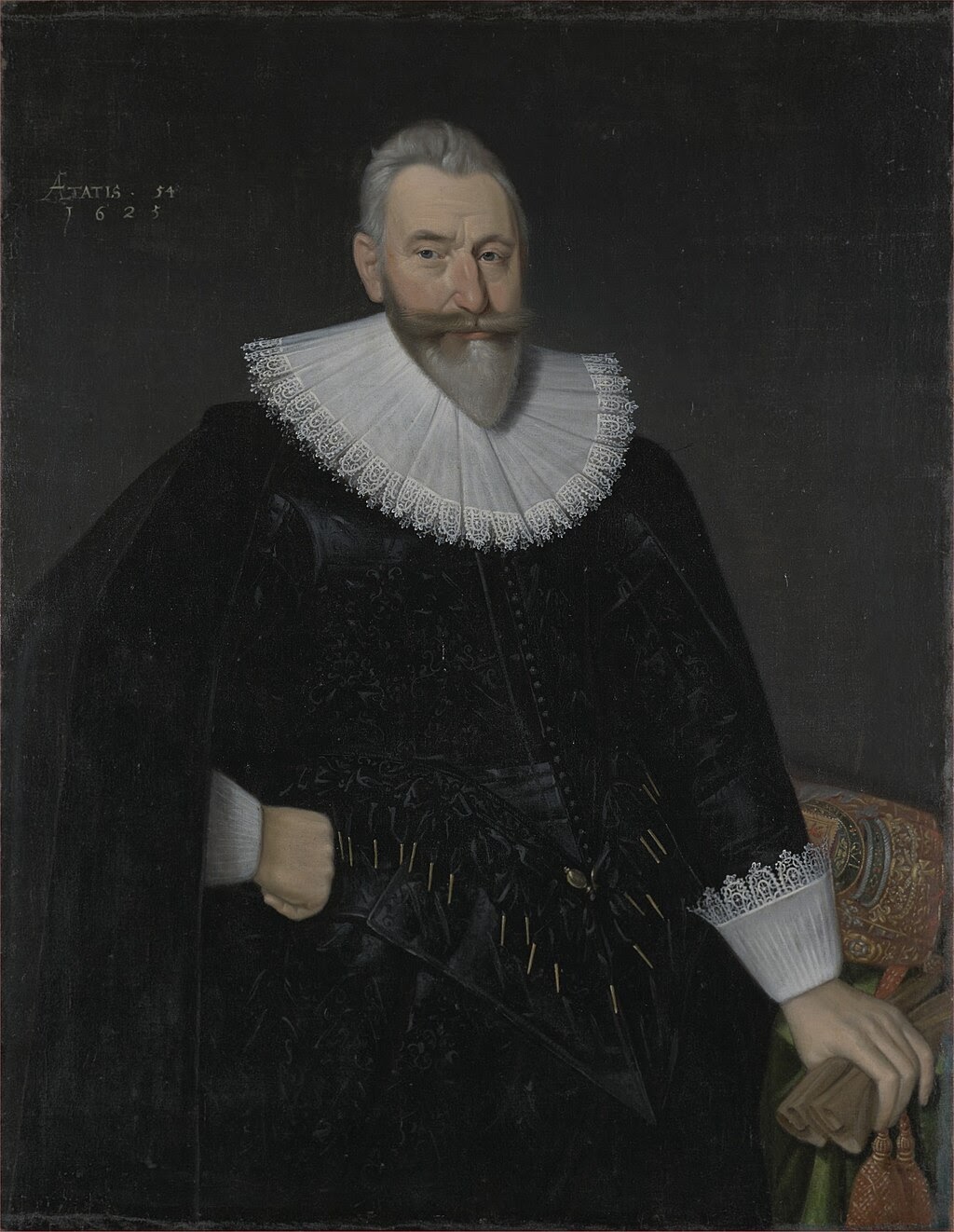
Late in the sixteenth century the lordship crossed into the house of Lindsay, Earls of Crawford. John Charteris of Kinfauns, who had no son, adopted as his heir Henry Lindsay, a younger brother of the 11th Earl of Crawford; Lindsay took the name Charteris in 1584 and was styled Harry Charteris of Kinfauns. He held the lordship as 4th Lord from 1601, and in 1621 succeeded to the earldom of Crawford itself, which he enjoyed barely two years before his death.
His son, Sir John Lindsay, 5th Lord Kinfauns, had the title confirmed by royal charter in 1608, but he died before his father, and with him the Charteris hold on Kinfauns came to its close.
The Hay Dynasty: Earls of Kinnoull
The seventeenth century brought Kinfauns into the hands of one of the ablest statesmen of the age. Sir George Hay, 6th Lord Kinfauns, rose to be Lord Chancellor of Scotland; he was created Viscount Dupplin and Lord Hay of Kinfauns in 1627, and Earl of Kinnoull in 1633 by Charles I. Under the Hays the lordship was carried at the very centre of Scottish government.
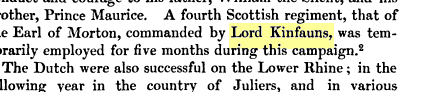
The Hay lords served the crown in arms as well as in council. The 7th Lord, second Earl of Kinnoull, was Captain of the Yeomen of the Guard, and a regiment of Scots was raised under the name of Lord Kinfauns for service on the Continent in the wars of the 1620s and 1630s. The family held the lordship well into the eighteenth century.
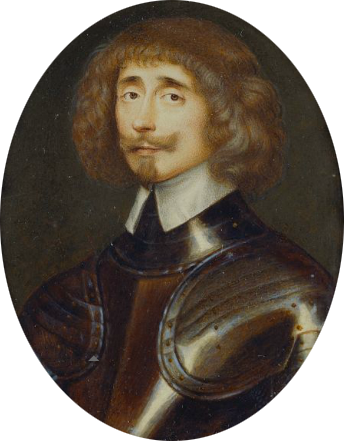


Legacy of the Lords of Kinfauns
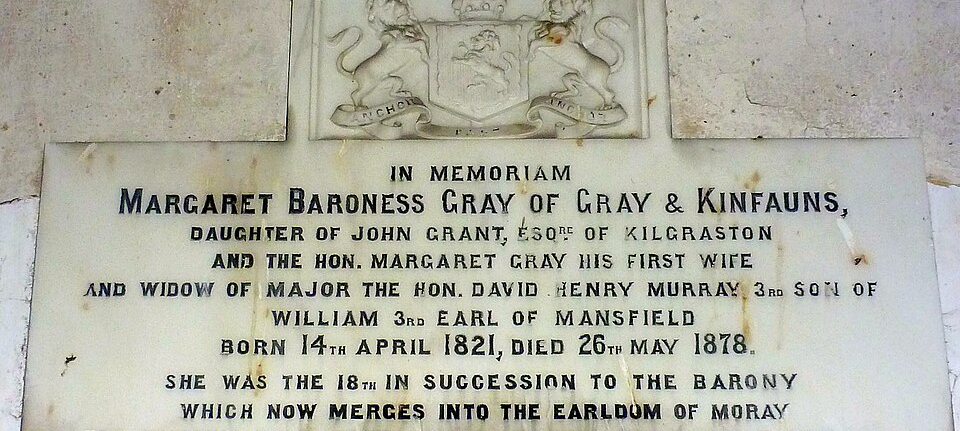
Over the next two centuries the lordship passed, always among kindred bound by blood and marriage, through the families of Blair, Carnegie and Gray. Each left its trace in the record, from a baronet of Balthayock to a baroness who took her own husband to court for her aliment. By the nineteenth century the dignity had come to the Stuart Earls of Moray, one of the seven ancient earldoms of Scotland, with which it merged, while the kindred lordship of Gray ran on in another line.
The marks of the lordship endure in more than stone. To it belongs the heritable office of the admiralty of the Tay, with the keeping of the river’s waters and its salmon fishings. Kinfauns Castle, above the Tay and rebuilt in the 1820s under Sir Francis Gray, remains the lordship’s ancient symbol in Scotland; in Ireland, Newhall House in County Clare, Killone Abbey and the Holy Well of St John the Baptist now stand in the care of the Commane family.

The Modern Era: Fergus, 26th Lord Kinfauns
The lordship has passed without break into its twenty-sixth generation. Its present holder, a native of County Clare, was recognised in the old Gaelic manner, consecrated Taoiseach of his name under Brehon law. With his wife Maria, Lady Kinfauns, he has restored Newhall House as the family seat and taken in hand the care of Killone Abbey and the Holy Well of St John the Baptist.
The Commanes belong to the old Gaelic nobility of Ireland, in which the chief is the recognised head of his clan. Clan Ó Comáin takes its name from Tulach Commáin, “the fort of Commán”, in the Burren of County Clare, where the great triple-walled fort of Cahercommaun still stands as the centre of an early medieval chiefdom. By tradition the family descends from the kings of the Déisi of Munster, among them Suibne mac Comáin and his son Congal, a guarantor of the Cáin Adamnáin in 697, and from Coman, a medieval Irish saint. In 2025 the clan was entered on the Register of Clans of Ireland.
Today the lordship rests with Fergus, 26th Lord Kinfauns, keeper of the hereditary office of admiralty of the Tay, custodian of Killone Abbey and the Holy Well of St John the Baptist, The Commane and Chief of Clan Ó Comáin: a living inheritance reaching back through six centuries to the redeemed knight who first held the lands of Kinfauns.
Lords Kinfauns, Succession
According to legend, the first Lords of Kinfauns held the lands under charters now lost.
- — Sir Thomas de LonguevilleLord of Kinfauns, c. 1340
- — Sir William CharterisLord of Kinfauns, 1378
- — Sir Thomas Charteris of CagnoreLord of Kinfauns, 1408
- — Sir William Charteris of CagnoreLord of Kinfauns, 1443
- 1st Sir Thomas CharterisRecorded in the Great Seal as domino Kynfawnis (Lord Kinfauns) by King James III of Scots, 13 July 1487, crown charter of confirmation.
- 2nd Sir John CharterisSucceeded his father; served heir to the lordship of Kinfauns, 2 October 1520.
- 3rd Sir John CharterisSon of the 2nd Lord Kinfauns, 1552.
- 4th Sir Harry Charteris, later LindsayA younger brother of the 11th Earl of Crawford, adopted as heir by the 3rd Lord, who had no son; took the name Charteris in 1584 and succeeded as 13th Earl of Crawford in 1621.
- 5th Sir John LindsaySon of Sir Harry; received a crown charter in 1608, holding Kinfauns as a wedding gift, but predeceased his father.
- 6th Sir George HayInfeft of the lordship of Kinfauns in 1621; created Viscount Dupplin and Lord Hay of Kinfauns in 1627, and Earl of Kinnoull in 1633.
- 7th Sir George HayStyled Lord Kinfauns by courtesy before inheriting in 1634, becoming 2nd Earl of Kinnoull.
- 8th Sir Alexander Blair of BalthayockInfeft of the lordship of Kinfauns in 1647.
- 9th Sir William Blair of Kinfauns, 1st & only BaronetRatified in 1654.
- 10th Ann Blair, Baroness of KinfaunsReceived a crown charter in 1673; married Hon. Alexander Carnegie, son of the Earl of Northesk.
- 11th Alexander Blair CarnegieSon; succeeded in 1695.
- 12th John Gray11th Lord Gray; married Margaret Blair in 1716, bringing the Kinfauns estate into the Gray family by 1741.
- 13th Charles Gray12th Lord Gray, 1782.
- 14th William John Gray13th Lord Gray, 1786.
- 15th Sir Francis Gray14th Lord Gray, 1808.
- 16th John Gray15th Lord Gray; received a sasine in 1843.
- 17th Madeline Gray, Baroness of Kinfauns16th Lady Gray; received a crown writ in 1868.
- 18th Margaret Murray, Baroness of Kinfauns17th Lady Gray; received a crown writ in 1869.
- 19th Edmund Archibald Stuart GrayCousin from the 11th Lord Gray; 15th Earl of Moray, 1878.
- 20th Lieut.-Col. Francis James Stuart16th Earl of Moray, 1896.
- 21st Morton Gray Stuart17th Earl of Moray, 1901.
- 22nd Francis Douglas Stuart18th Earl of Moray, 1930.
- 23rd Archibald John Morton Stuart19th Earl of Moray, 1943.
- 24th Douglas John Stuart20th Earl of Moray, 1974.
- 25th John Douglas Stuart21st Earl of Moray, 2011.
- 26th Fergus Commane KinfaunsThe present Lord Kinfauns, 2024.
Guardians of a Storied Past
From a redeemed sea-rover to statesmen, soldiers and stewards, the Lords of Kinfauns have met every turn of Scotland’s history without losing the thread of their descent. Theirs is a lineage measured not in years but in centuries, and it endures still in the family who carry its name and guard its heritage.